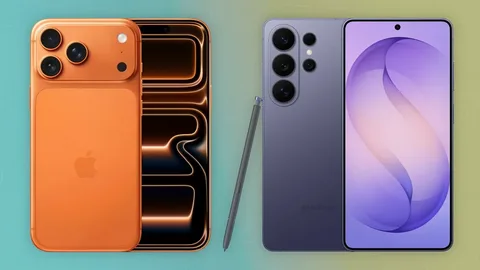
Choosing between an iPhone and a Samsung smartphone remains one of the biggest decisions for people shopping for a premium phone in 2026. Both brands offer powerful processors, advanced cameras, high-quality displays, artificial intelligence features, strong security, and premium designs.
Apple and Samsung also take very different approaches to their software and hardware. Apple focuses on the tightly integrated iOS ecosystem, while Samsung offers Android with extensive customization and a wide range of devices.
So, which is better in 2026: iPhone or Samsung?
There is no single answer for everyone. The better choice depends on your budget, preferred operating system, camera needs, gaming habits, battery requirements, and the other devices you already own.
iPhone vs Samsung: The Main Difference
The biggest difference between the two brands is their software.
iPhones run Apple’s iOS operating system, while Samsung Galaxy phones use Google’s Android operating system with Samsung’s own interface and features.
Apple controls both the iPhone hardware and iOS software. This allows the company to tightly integrate its devices.
Samsung, on the other hand, gives users more flexibility and customization through Android.
Both approaches have advantages.
Design and Build Quality
Premium iPhones and Samsung Galaxy devices both use high-quality materials and sophisticated designs.
Apple generally maintains a recognizable design language across its iPhone lineup. Samsung has experimented more with different screen designs, camera arrangements, and foldable smartphones.
Samsung’s Galaxy lineup also includes devices such as the Galaxy Z Fold and Galaxy Z Flip, giving buyers form factors that Apple does not currently offer.
For buyers who want a conventional premium smartphone, both brands provide excellent options.
For someone interested in foldable phones, Samsung has a clear advantage because of its established foldable lineup.
Display Quality
Samsung has historically been one of the strongest companies in smartphone display technology, and its flagship Galaxy phones feature bright, high-resolution OLED displays with smooth refresh rates.
Apple’s premium iPhones also offer excellent OLED displays with strong brightness, color accuracy, contrast, and smooth animations.
For ordinary users, the difference between modern flagship displays may be less significant than it once was.
Samsung can be particularly attractive to people who prefer very large displays, while Apple offers several screen sizes across its lineup.
Performance
Both companies offer extremely powerful processors.
Apple’s custom-designed chips are known for strong performance and efficiency. Samsung’s flagship Galaxy devices use high-end processors that provide excellent performance for gaming, multitasking, photography, video editing, and AI applications.
For everyday activities such as WhatsApp, Instagram, YouTube, browsing, email, and photography, both platforms provide more than enough performance.
The differences become more noticeable in demanding tasks such as high-end gaming, professional video editing, and advanced AI processing.
Camera Comparison
Camera quality is one of the most important reasons people choose premium smartphones.
Samsung’s flagship phones often provide multiple camera options, including wide, ultra-wide, and telephoto systems. Some models are particularly strong when it comes to zoom photography.
Apple focuses heavily on image processing, video recording, color consistency, and ease of use.
iPhone Camera Strengths
- Excellent video recording
- Consistent image processing
- Strong portrait photography
- Reliable autofocus
- Good integration with editing apps
Samsung Camera Strengths
- Strong zoom capabilities
- Flexible camera systems
- High-resolution photography
- Numerous camera modes
- Extensive manual controls on supported models
If you record a lot of videos for social media, the iPhone can be particularly appealing.
If you enjoy experimenting with photography and zoom, Samsung may have more flexibility.
Software Experience
The software experience is one of the biggest differences between the two brands.
iOS is known for its simple interface, consistent design, strong privacy controls, and close integration with Apple’s hardware ecosystem.
Samsung’s Android software offers considerably more customization.
Users can change themes, layouts, widgets, default applications, and many aspects of the user interface.
Samsung also adds productivity features that can be useful for multitasking and people who use their phones as work devices.
Artificial Intelligence Features
AI has become a major smartphone feature in 2026.
Both Apple and Samsung integrate AI into various aspects of their devices.
AI features can assist with tasks such as:
- Writing and editing
- Image editing
- Translation
- Summarization
- Search
- Voice assistance
- Photo organization
- Productivity
The exact features available can vary by device, software version, country, and language.
When comparing phones, buyers should check the features available on the specific model rather than assuming every AI feature works everywhere.
Battery Life
Battery performance depends on the specific model rather than simply the brand.
Large Samsung Galaxy models can include large batteries and efficient displays, while Apple’s hardware and software optimization can help iPhones achieve strong battery performance despite differences in battery capacity.
Real-world battery life depends on screen brightness, mobile network conditions, gaming, video recording, background applications, and other factors.
For heavy users, it is worth looking at independent battery tests for the exact models being compared.
Charging
Samsung generally offers more charging flexibility across its Galaxy lineup.
Some Samsung models support faster wired charging than competing iPhones, while wireless charging is available on many premium devices.
Apple also supports wired and wireless charging and has developed its own charging ecosystem around the iPhone.
Charging speed may not be the most important factor for a light user, but it can make a significant difference for people who frequently need to recharge during the day.
Ecosystem
The ecosystem is one of Apple’s biggest advantages.
An iPhone works closely with products such as the Mac, iPad, Apple Watch, and AirPods.
Features such as AirDrop, iCloud synchronization, and device continuity can make moving between Apple devices extremely convenient.
Samsung also has a growing ecosystem involving Galaxy phones, tablets, watches, earbuds, Windows PCs, and other devices.
For someone who already owns several Apple products, an iPhone may be the natural choice.
For Android users who use Windows computers and a range of different brands, Samsung can offer more flexibility.
Gaming
Both platforms are capable gaming machines.
Premium iPhones offer powerful processors and strong graphics performance. Samsung’s flagship Galaxy devices also provide high-performance hardware, large displays, and features designed for gaming.
The best gaming phone depends on the specific game, thermal performance, display refresh rate, battery life, and software optimization.
Android can provide more flexibility for certain gaming configurations, while iOS has a strong selection of optimized premium applications and games.
Storage
Storage is another important consideration.
People who record lots of high-resolution videos, download large games, or keep extensive media libraries should consider purchasing enough storage from the beginning.
Neither platform should be judged only by its base storage option because storage configurations vary between models.
If you plan to keep a phone for several years, paying for additional storage can be more practical than constantly deleting files.
Security and Privacy
Apple places significant emphasis on privacy and security.
iOS provides strong security controls, regular software updates, and extensive control over application permissions.
Samsung and Android also provide sophisticated security features, including biometric authentication, application permissions, secure folders, and hardware-backed security technologies on supported devices.
Both ecosystems can be secure when users keep their devices updated and follow good security practices.
Software Updates
Long-term software support is important when buying an expensive smartphone.
Apple has historically provided long software support for iPhones, allowing older devices to receive newer versions of iOS for years.
Samsung has also significantly expanded its software-support commitments for selected recent Galaxy devices.
However, support varies by model, so buyers should check the official update policy for the specific phone they plan to purchase.
Price
Price is one area where the comparison becomes more complicated.
Apple primarily positions the iPhone as a premium product, although older models and lower-priced options can provide more affordable entry points.
Samsung has a much wider range of smartphones.
Its Galaxy lineup includes budget devices, mid-range phones, premium flagships, and foldable smartphones.
This gives Samsung an advantage for buyers who want more choices across different budgets.
iPhone Advantages
An iPhone may be the better choice if you prioritize:
- Simple and consistent software
- Long-term software support
- Video recording
- Apple ecosystem integration
- Strong performance
- Privacy features
- Easy device-to-device communication
Samsung Advantages
Samsung may be the better choice if you prioritize:
- Android customization
- Large displays
- Camera versatility
- Zoom photography
- Foldable phones
- Fast charging on supported models
- A wide range of prices
- Multitasking and productivity features
Which One Should You Buy in 2026?
Choose an iPhone if you already use Apple devices and want a seamless ecosystem, strong video capabilities, straightforward software, and long-term support.
Choose Samsung if you prefer Android, want extensive customization, need greater hardware variety, or are interested in foldable phones.
Neither brand is objectively better in every category.
A professional who relies heavily on a Mac and Apple Watch may benefit more from an iPhone. Someone who prefers customization and wants a foldable smartphone may find Samsung more attractive.
Final Verdict
The iPhone vs Samsung debate is unlikely to disappear anytime soon.
In 2026, both brands offer excellent smartphones with powerful processors, sophisticated cameras, bright displays, AI-powered software, and strong security.
The iPhone is particularly attractive for users who value Apple’s ecosystem, video recording, simplicity, and long-term software support. Samsung is an excellent choice for users who want Android flexibility, customization, camera versatility, and a wider selection of hardware.
Before buying, compare the exact models rather than judging the brands as a whole. Look at price, battery life, camera performance, storage, software support, charging, and the features you actually use.
Ultimately, the best smartphone is not necessarily the one with the longest specification sheet. It is the one that fits your daily life.
Leave a Reply