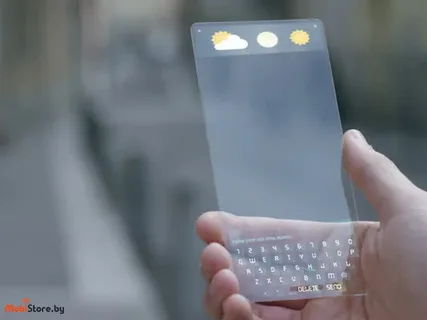
Smartphones have changed dramatically since the first modern touchscreen devices appeared.
They have become cameras, payment devices, gaming machines, navigation tools, workstations, entertainment systems, and personal assistants.
The next five years could bring another major transformation.
Instead of simply becoming faster, smartphones are likely to become more intelligent, more connected, more energy efficient, and increasingly integrated with artificial intelligence.
AI Will Become More Important
Artificial intelligence is likely to be one of the biggest forces shaping future smartphones.
AI features can already help with photography, writing, translation, voice commands, search, and productivity.
Future smartphones may perform more AI processing directly on the device.
This could allow users to access intelligent features without sending every request to a remote server.
On-Device AI
On-device AI means processing artificial-intelligence tasks locally on the smartphone.
This can offer several advantages.
Processing data locally may reduce latency and can provide greater control over certain types of personal information.
Future smartphone processors are likely to include increasingly powerful AI acceleration hardware.
Better Cameras
Smartphone cameras are likely to continue improving.
However, progress may focus less on simply increasing megapixels and more on computational photography.
AI could improve:
- Low-light photography
- Portrait effects
- Image stabilization
- Zoom
- Object removal
- Video enhancement
- Automatic editing
The phone may increasingly understand what it is photographing rather than simply recording an image.
Foldable Phones
Foldable smartphones are another major area of development.
Instead of carrying a conventional phone and tablet separately, users can potentially unfold one device into a larger screen.
Future foldables may become thinner, lighter, more durable, and less expensive.
Rollable and other flexible display technologies could also become more important.
Battery Technology
Battery life remains one of the biggest limitations of smartphones.
Manufacturers are researching new battery materials, charging technologies, and more efficient processors.
Future phones may offer longer battery life without requiring significantly larger batteries.
Faster charging could also become more widespread.
Satellite Connectivity
Satellite connectivity could expand smartphone communication beyond traditional cellular networks.
In areas without mobile coverage, compatible smartphones may be able to communicate through satellite systems for certain services.
This could be particularly useful during emergencies or in remote locations.
More Durable Smartphones
Future smartphones may become more resistant to drops, water, dust, and scratches.
Improvements in glass, metal, polymers, and display technology could make devices more durable.
Better durability could also reduce electronic waste because users may keep phones for longer.
Smartphone Displays
Displays are likely to become more efficient and flexible.
Higher refresh rates, better brightness, improved outdoor visibility, and foldable designs could become increasingly common.
Manufacturers may also continue reducing bezels and experimenting with under-display technologies.
More Powerful Processors
Smartphone processors are becoming increasingly capable.
Future chips may provide desktop-class performance for some tasks while consuming relatively little power.
This could allow smartphones to handle increasingly sophisticated applications.
Smartphones as Computers
The distinction between smartphones and computers could continue to disappear.
With external monitors, keyboards, cloud services, and powerful processors, a smartphone can already serve as a computing device for certain workflows.
Future phones could become capable of replacing basic laptops for more users.
Better Connectivity
5G networks will continue expanding, while research into future wireless technologies such as 6G progresses.
Faster and more reliable connections could support cloud gaming, immersive applications, remote collaboration, and connected devices.
However, network quality will continue to depend heavily on local infrastructure.
Augmented Reality
Augmented reality could become more practical as smartphone processors, cameras, and sensors improve.
Phones may increasingly understand their physical surroundings and overlay digital information onto the real world.
AR glasses could eventually take over some functions currently performed by smartphone screens.
Smart Home Integration
Future smartphones may become central controllers for smart homes.
Users could manage:
- Lights
- Security cameras
- Door locks
- Thermostats
- Appliances
- Entertainment systems
AI could automate many of these interactions.
Health and Fitness
Smartphones will likely continue working closely with watches and other wearable devices.
The phone can serve as a central platform for organizing activity and wellness information collected by connected devices.
The emphasis will likely shift toward long-term trends and personalized insights.
Security and Privacy
As smartphones become more powerful and intelligent, security becomes even more important.
Future devices may use stronger biometric systems, hardware security features, encrypted processing, and AI-powered threat detection.
At the same time, users will need greater transparency about how personal data is collected and processed.
Smartphones in Developing Markets
Future smartphone development will not only focus on premium flagship devices.
Affordable phones will remain extremely important in markets where consumers are price-sensitive.
Battery life, durability, dual-SIM support, network compatibility, repairability, and affordability may matter more than cutting-edge features.
Will Smartphones Disappear?
Smartphones are unlikely to disappear suddenly.
However, the way people interact with them could change.
Wearable devices, smart glasses, voice assistants, cars, and other connected products may take over certain smartphone functions.
The smartphone could gradually become the central computing hub rather than the only screen people use.
What Will Smartphones Look Like in 2030?
By around 2030, smartphones could feature:
- Much stronger AI capabilities
- More efficient processors
- Better battery technology
- Advanced cameras
- More durable displays
- More sophisticated foldable designs
- Improved satellite communication
- Deeper integration with wearable devices
Not every prediction will become reality, but the general direction is clear: smartphones are becoming increasingly intelligent computing platforms.
Final Thoughts
The smartphone of the future will likely be defined by more than processor speed or camera megapixels.
Artificial intelligence, battery technology, flexible displays, satellite connectivity, advanced cameras, security, and cross-device integration are likely to shape the next generation of mobile devices.
Some changes will happen gradually, while others could arrive unexpectedly as new technologies mature.
The biggest shift may be that smartphones become less noticeable as individual gadgets and more deeply integrated into everyday life.
Your future phone may still fit inside your pocket, but the technology surrounding it could stretch far beyond the glass screen in your hand.
Leave a Reply