Electric vehicles have moved beyond small city cars and compact sedans. Electric SUVs are now becoming a major part of the global automotive market.
SUVs are popular because they provide a higher driving position, additional passenger space, and useful cargo capacity. Combining those characteristics with an electric powertrain gives buyers a practical alternative to traditional petrol-powered SUVs.
In 2026, consumers have more electric SUV choices than ever, ranging from relatively affordable compact models to premium performance vehicles.
Why Are Electric SUVs Becoming Popular?
The popularity of electric SUVs comes from several factors.
First, consumers increasingly want the practicality of an SUV.
Second, battery technology has improved, allowing manufacturers to develop vehicles with increasingly useful driving ranges.
Third, electric motors provide instant torque, which can make larger vehicles feel surprisingly responsive.
Electric SUVs can also provide quiet operation and potentially lower energy and maintenance costs than conventional vehicles.
1. Tesla Model Y
The Tesla Model Y is one of the most recognizable electric SUVs.
Its combination of range, practicality, technology, and access to Tesla’s charging ecosystem has helped make it popular in multiple markets.
The Model Y offers a relatively spacious interior for its exterior size and provides useful cargo capacity.
Its exact specifications and pricing can change depending on the market and model configuration.
2. Hyundai Ioniq 5
The Hyundai Ioniq 5 stands out because of its distinctive design and fast-charging capabilities.
Its dedicated electric platform allows Hyundai to provide a spacious interior despite the vehicle’s relatively moderate exterior dimensions.
The Ioniq 5 is also known for its modern cabin and technology-focused features.
3. Kia EV6
The Kia EV6 shares electric-vehicle technology with other vehicles in the Hyundai Motor Group ecosystem but has a more performance-oriented design.
It combines sporty styling with useful electric range and fast charging.
For buyers who want an electric vehicle that feels more dynamic than a traditional family SUV, the EV6 can be an appealing choice.
4. Ford Mustang Mach-E
The Mustang Mach-E combines SUV practicality with a design influenced by the Mustang name.
It offers strong acceleration in certain configurations and provides a technology-focused interior.
Different versions provide different performance and range characteristics.
The Mach-E can appeal to buyers who want an electric SUV with a sportier personality.
5. Volkswagen ID.4
The Volkswagen ID.4 is designed primarily as a practical family electric SUV.
Its interior provides useful passenger and cargo space while the electric powertrain delivers quiet operation.
The ID.4 is aimed at buyers who want a conventional SUV experience combined with electric driving.
6. BMW iX
The BMW iX is a premium electric SUV with a strong focus on luxury, technology, comfort, and performance.
It is positioned well above mainstream EVs in terms of pricing.
The iX demonstrates how electric technology is increasingly being integrated into premium vehicles.
7. Mercedes-Benz EQE SUV
The EQE SUV brings Mercedes-Benz luxury into the electric SUV segment.
It combines a premium interior with advanced technology and electric propulsion.
Buyers interested in luxury EVs can consider it alongside other premium electric SUVs.
8. Rivian R1S
The Rivian R1S is a large electric SUV designed with adventure and utility in mind.
It provides substantial passenger and cargo space and offers configurations aimed at drivers who want more rugged capability.
Its availability varies by market.
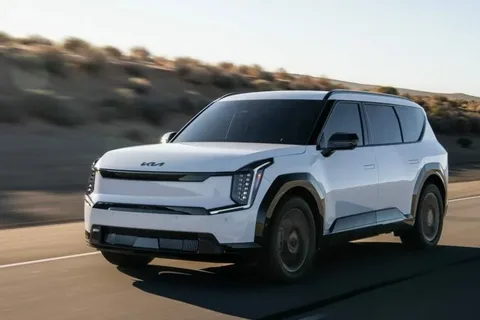
9. Kia EV9
The Kia EV9 is a larger electric SUV designed for families who need significant interior space.
Its three-row configuration gives it an advantage over many smaller electric SUVs.
The EV9 demonstrates how electric vehicles are increasingly moving into larger family-vehicle categories.
10. Volvo EX90
The Volvo EX90 is a premium electric SUV designed with safety, technology, and comfort as major priorities.
Volvo has built a strong reputation around automotive safety, and the EX90 brings advanced electronic systems and sensors into the company’s electric lineup.
Electric SUV Range
Driving range is one of the first specifications shoppers look at.
However, official range figures should not be interpreted as guaranteed real-world distances.
Actual range can be affected by:
- Driving speed
- Weather
- Temperature
- Terrain
- Air conditioning
- Tire pressure
- Passenger weight
- Driving style
Highway driving at high speeds can significantly reduce range compared with slower urban driving.
Charging Speed
Charging speed can be just as important as range.
A vehicle with a large battery may still be convenient if it can recharge quickly.
DC fast charging can significantly reduce charging time during road trips.
However, the charging curve matters.
A vehicle may advertise a high peak charging rate, but it may not maintain that rate throughout the entire charging session.
Home Charging
Home charging is one of the biggest advantages of EV ownership.
If a driver can install a suitable charger at home, the vehicle can be charged while parked.
This can be much more convenient than visiting a petrol station regularly.
However, installation requirements vary depending on the property and electrical system.
Electric SUVs in Nigeria
Electric SUV adoption in Nigeria is still developing.
For Nigerian buyers, charging infrastructure should be one of the first considerations.
Before purchasing an electric SUV, investigate:
- Home charging options
- Public charging stations
- Electricity reliability
- Vehicle service availability
- Replacement parts
- Battery warranty
- Technician availability
A vehicle with an impressive advertised range may not be convenient if reliable charging is difficult to access.
Are Electric SUVs Expensive?
Electric SUVs can be expensive because batteries and advanced electronic systems add significant costs.
However, prices vary considerably.
The market now includes smaller electric crossovers alongside premium models.
Buyers should compare the total cost of ownership rather than only the purchase price.
Potential savings can come from reduced fuel consumption and certain maintenance requirements.
Electric SUV Maintenance
Electric vehicles generally have fewer traditional mechanical components than petrol-powered vehicles.
They do not require conventional engine-oil changes, for example.
However, EVs still require maintenance.
Important components include:
- Tires
- Brakes
- Suspension
- Cooling systems
- Steering components
- Battery systems
- Electrical systems
Battery health is particularly important when buying a used electric SUV.
Electric SUVs and Performance
Electric motors can deliver torque almost immediately.
This means even large SUVs can accelerate quickly.
Performance-oriented electric SUVs can therefore provide acceleration figures that rival or exceed some traditional sports cars.
However, aggressive driving can consume more energy and reduce range.
Safety Features
Modern electric SUVs can include numerous driver-assistance features.
Depending on the model, these may include:
- Automatic emergency braking
- Adaptive cruise control
- Lane assistance
- Blind-spot monitoring
- Parking assistance
- Surround-view cameras
- Driver monitoring
These systems can improve convenience and safety, but they are not a substitute for attentive driving.
What Should You Consider Before Buying?
Before purchasing an electric SUV, ask:
- How far do I normally drive each day?
- Can I charge at home?
- Where can I fast-charge?
- What is the real-world range?
- How long does charging take?
- What is the battery warranty?
- Are spare parts available?
- Can local technicians service the vehicle?
- How much does insurance cost?
- What is the expected resale value?
These questions can help determine whether an EV actually fits your lifestyle.
Final Thoughts
Electric SUVs are becoming one of the most important categories in the automotive industry.
Models such as the Tesla Model Y, Hyundai Ioniq 5, Kia EV6, Ford Mustang Mach-E, Volkswagen ID.4, BMW iX, Kia EV9, Rivian R1S, and Volvo EX90 demonstrate the wide variety of electric SUVs now available.
The best model depends on your budget, driving requirements, preferred size, charging access, and desired features.
For city drivers with convenient home charging, an electric SUV can offer a quiet and practical driving experience. For people who frequently travel long distances in areas with limited charging infrastructure, the decision requires more careful planning.
As charging networks expand and battery technology continues to improve, electric SUVs are likely to become an increasingly common sight on roads around the world.
Leave a Reply